
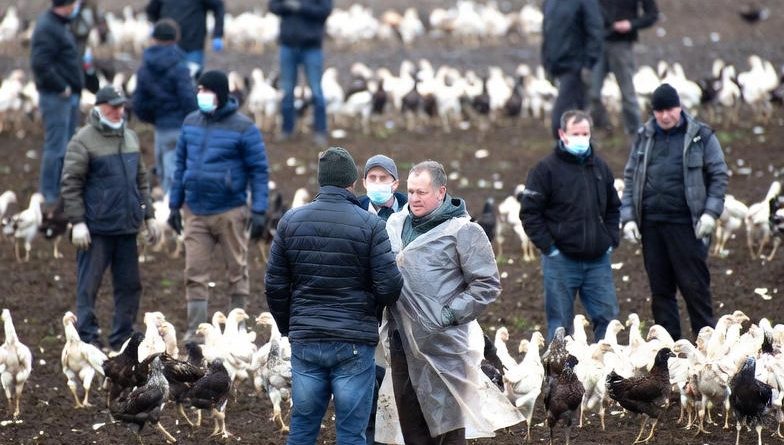
UK Bird Flu Outbreak Could Be the Most Severe Yet, Warns Expert
Farmers across the UK are being urged to brace themselves as the current bird flu outbreak shows signs of being the most aggressive on record, according to one of the country’s leading avian virology experts.
Professor Ian Brown of the Pirbright Institute, formerly head of science at the Animal and Plant Health Agency (APHA), cautioned that this strain of avian influenza appears to be “as super-infectious as any high pathogenicity avian influenza we’ve ever seen”. He stressed that farmers should be “prepared for the worst”.
His warnings come as England introduces a nationwide mandatory housing order, requiring all poultry and captive birds to be kept indoors in a bid to curb the spread of the virus. The measure is aimed at reducing contact between farmed birds and potentially infected wild birds.
Farmers Feeling the Strain
In Wiltshire, free-range egg producer Sarah Godwin described her distress at having to confine her 32,000 hens indoors:
“It’s awful. We want them outside, but it’s a necessary evil. The risk is too high, and the consequences could be catastrophic for us and the hens,” she told the BBC.
Despite strict biosecurity measures, Mrs Godwin admitted she is still deeply anxious. Just a gram of contaminated material from a wild bird—or even a small trace carried on someone’s boots—could infect her entire flock. In such an event, every bird would have to be culled.
Rising Cases and Mounting Concern
Since the start of the season in October, 26 cases of highly pathogenic avian influenza (H5N1) have been confirmed on UK farms—22 of them in England. Whole flocks have been destroyed to control outbreaks.
Professor Brown highlighted how serious the situation could become:
“We had a very significant epidemic between 2021 and 2023—over 350 outbreaks in the UK. That was extraordinary. The early signs this time are not encouraging.”
He urged the industry to tighten defences further:
“Now is the time to batten down the hatches, review biosecurity, and double down on efforts.”
Risk to Public Remains Low—but Vigilance Needed
Health officials have sought to reassure the public. The UK Health Security Agency (UKHSA) says the risk to human health remains “very low”, while the Food Standards Agency (FSA) maintains that properly cooked poultry and eggs are safe to eat.
However, Professor Brown emphasised that the virus must be closely monitored for mutations:
“These viruses are still bird viruses—they don’t want to be in humans. But influenza viruses evolve. They make mistakes when they replicate, and one of those errors could lead to a strain better adapted to infecting people.”
Sector Urged to Stay Alert
Christine Middlemiss, the UK’s Chief Veterinary Officer, called on all bird keepers to strictly follow housing and biosecurity rules.
She acknowledged the hardships faced by the industry and thanked farmers for their ongoing cooperation, noting that similar measures in previous years successfully reduced infection rates.
Richard Griffiths, Chief Executive of the British Poultry Council, backed the decision, saying the housing order is “the right move at the right time”.
Discover more from Trendxtra
Subscribe to get the latest posts sent to your email.