
A Fragile Lifeline: Western America’s Rivers on the Brink
While American politics is often dominated by fiery rhetoric and bold declarations, one of the most pressing challenges facing the Western United States is unfolding with notable restraint — the growing crisis over the Colorado River.
For almost a century, the Colorado River has been the lifeblood of the American West, supporting more than 40 million people across seven states, vast farmlands, Indigenous communities, and booming cities such as Phoenix, Las Vegas and Los Angeles. Yet, decades of drought, climate change and unchecked demand have left the river perilously overstretched. Reservoirs like Lake Mead and Lake Powell — once triumphs of engineering — now sit worryingly low, revealing sun-scorched canyon walls that had been hidden underwater for generations.
What makes this moment remarkable isn’t just the severity of the environmental strain, but the unexpectedly measured response from Washington. One might expect political theatrics: accusations, presidential tweets, or even legal sabre-rattling. Instead, the current administration has chosen quiet diplomacy and cautious negotiation.
Rather than seizing control or stoking division, federal officials have opted for cooperation. Leading the talks is Scott Cameron — not a political heavyweight, but a pragmatic civil servant known more for spreadsheets than speeches. His task: coax seven fiercely protective states, each with its own economic pressures and historical grievances, into sharing less water than ever before.
This is no small feat. Arizona, California, Nevada, Colorado, Utah, New Mexico and Wyoming are locked in tense discussions over who should bear the deepest cuts. Farmers fear losing their crops, cities worry their taps may run dry, and tribal nations — many of whom have senior water rights — demand long-overdue respect and inclusion in the process.
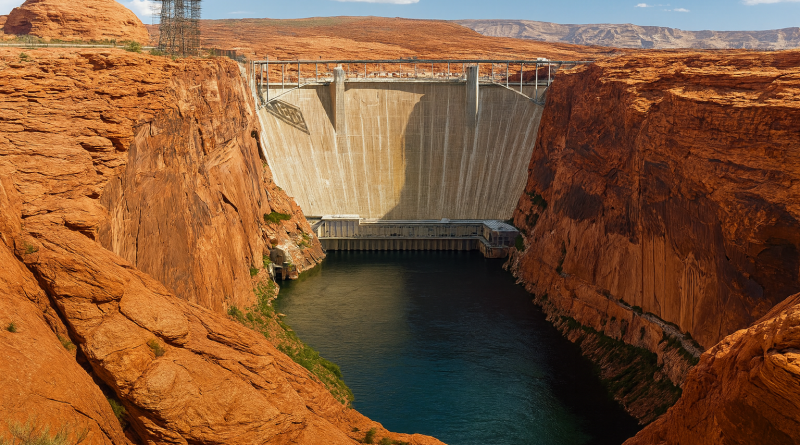
The stakes are impossibly high. If water levels at Lake Powell drop below a critical point as early as next summer, hydropower generation at Glen Canyon Dam could cease. That would leave millions without electricity and force the government to choose between power and water — a decision few would wish to make.
Despite the political potential of this crisis — including its proximity to key election states and the involvement of California’s outspoken governor, Gavin Newsom — the federal response has been curiously calm. No political grandstanding. No inflammatory speeches. Instead, technical meetings, late-night drafting of plans and quiet assurances behind closed doors.
Even so, tensions simmer beneath the surface. States are preparing their legal teams for a potential Supreme Court battle, just in case diplomacy falters. Some are rallying their congressional representatives, anticipating that compromise may prove elusive.
But for now, there is still hope. Funding originally earmarked for climate resilience remains available, and the federal government is considering using it to support conservation projects and compensate water users for voluntary reductions. These are small but significant gestures — signs that cooperation, not confrontation, might still prevail.
And perhaps that is the real story here: a crisis that could so easily ignite political warfare is, for the moment, being handled with restraint. No slogans. No spectacle. Just the quiet acknowledgement of a shared problem — and a fragile hope that common sense may yet win over conflict.